
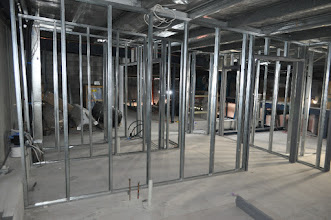
A quieter room starts with a more precise question than “Which board blocks noise?” For acoustic wall linings in Jindalee, first establish what sound is troublesome, where it comes from and when it matters. Speech from the next room presents a different problem from footsteps above or reverberation inside a hard-surfaced room.
Queensland Interior Linings can discuss the lining portion of a Brisbane renovation, with specialist acoustic advice where needed. Any performance target should relate to a defined assembly and site conditions, not an unsupported promise attached to one product.
Separate sound transfer from room echo
Sound insulation concerns noise passing between spaces. Absorption concerns sound reflecting within a space. Soft furnishings or suitable absorptive finishes may reduce echo, but they should not be presented as substitutes for a separating wall designed to limit sound transfer.
Describe the activity you want to protect: a conversation, a sleeping space or focused work. Also identify whether the disturbance comes through the wall face, an open doorway, the ceiling void or another route. A clear problem statement keeps the scope from expanding into treatments that do little for the actual concern.
Compare a targeted wall upgrade with broader work
A targeted wall upgrade can limit demolition and disruption when the wall is a significant sound path. Depending on the design, options may involve changes to lining mass, cavity insulation or separation between surfaces. Each affects wall depth, junction details and the amount of existing work that must be removed.
The limitation is flanking transmission: sound can travel around an improved wall through adjoining construction. Doors, gaps and service penetrations may also dominate the result. A broader scope can address more of these paths, but it requires coordination across several trades and may affect ceilings, trims and usable room space.
Do not assume that doubling a layer produces a predictable improvement in every room. Compare proposed assemblies against a stated objective, with assessment where the existing construction or noise path is uncertain.
Treat the system as a complete design
Manufacturer documentation should guide the complete specified acoustic system, including framing, layers, insulation, seals, joints and penetrations. Substituting one component can change the result. Where fire separation is also required, the full specified fire and acoustic requirements must be reconciled rather than selected independently.
Ask who will confirm the design and what evidence supports any claimed rating. This is a scope and specification discussion, not an assumption about a contractor's credentials. The plastering services overview can help frame the lining work, while an acoustic consultant may be needed to define or verify performance.
Include the edges and services in the comparison
For a Jindalee property, compare alternatives using the same boundaries: wall face, perimeter seals, adjoining junctions, doors and penetrations. State whether electrical relocation, insulation, decoration and reinstatement are included. Qualified trades must handle electrical work, and older materials may need asbestos assessment before disturbance.
An apparently smaller quotation can exclude the details that make the design workable. Conversely, treating every surface may be unnecessary if assessment identifies one dominant weakness. Ask how each included item contributes to the objective and what limitations remain after completion.
Give Queensland Interior Linings a simple room sketch and a description of the noise when making a quote enquiry. An informed comparison explains what the lining can reasonably address, what requires other work and whether further investigation should precede a construction decision.