
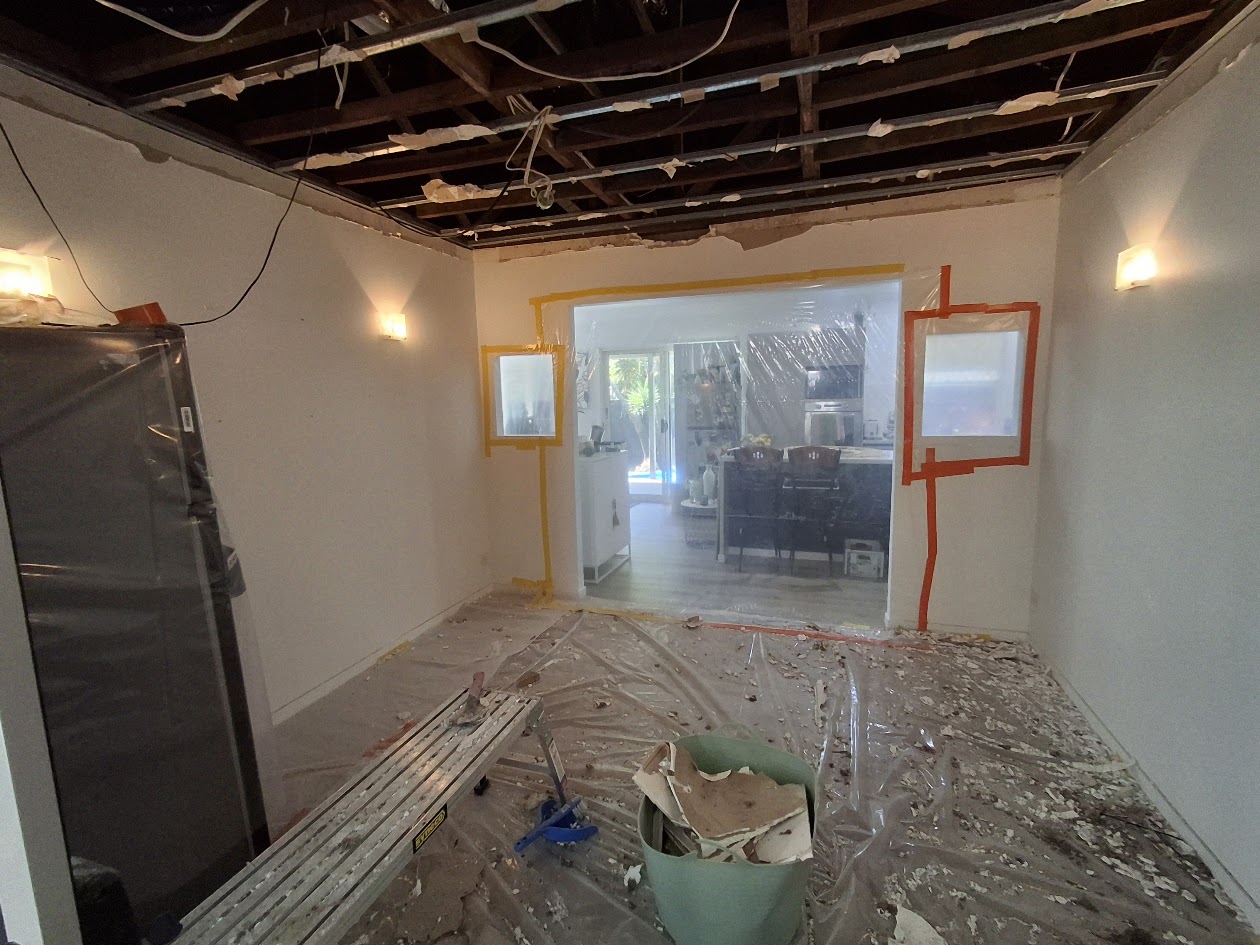
A ceiling crack is a symptom, not a complete repair specification. Its location, history and surrounding conditions help determine what should happen next. For ceiling repairs in St Lucia, prepare for an assessment by recording what has changed without poking, cutting or loading the damaged area.
Queensland Interior Linings can discuss the visible lining issue, but underlying moisture, structural or electrical concerns may require other qualified trades first. A neat patch is not a substitute for understanding why the damage appeared.
Record useful observations safely
Take an overall room photograph and a closer image from a safe position. Note whether the crack follows a joint, meets a wall or sits near a light fitting. Record when it was first noticed and whether it seems to be changing, without claiming a cause based on appearance alone.
If the ceiling is sagging, bulging or shedding material, keep people away and seek prompt professional advice rather than pressing on it to test its strength. Water near electrical fittings needs urgent attention from qualified electrical trades. Do not climb into the ceiling space simply to obtain a better photograph.
Resolve causes before cosmetic work
Staining, softness or a history of leaks needs investigation. Identify and address the moisture source before ceiling repairs proceed, and have the affected materials assessed for suitability to remain. A dry-looking surface does not establish that concealed areas are ready to close.
Where movement or support concerns are suspected, the responsible building professional should advise on the cause and necessary work. If suspect older material would be disturbed during assessment or repair, arrange asbestos assessment first. Sanding or cutting an unknown ceiling is not an appropriate diagnostic shortcut.
Agree how much ceiling is included
A small visible crack may require a repair area larger than its width, while extensive damage may prompt discussion of replacement. Ask what existing material will be retained, where repair boundaries will fall and how surrounding finishes will be treated.
For example, a crack beside a cornice may involve the junction as well as the flat ceiling. The plastering scope should say whether that decorative edge is included. Avoid comparing quotes only by the apparent size of the mark when their preparation and finishing allowances differ.
Coordinate fixtures and room protection
Have qualified electrical trades handle any required light removal, isolation or reinstatement. Confirm who protects floors, moves furniture and supplies safe access equipment. Clear enough space for the actual work area rather than leaving only a narrow path under the crack.
In a St Lucia home, dust containment and extraction should be planned around any rooms that remain occupied. The selected repair materials and methods should follow the manufacturer's complete specified system. Fixing requirements are specific to that system and the existing construction, not a universal spacing guide.
Leave time for a proper handover
Compounds must dry before sanding. Allow the finishing process to follow material requirements and site conditions, then review the repair before decorating. Ask the painter how the ceiling coating will be blended or renewed; a repaired area and a finished painted ceiling are not necessarily the same scope.
If the damage forms part of a claim, our insurance repair information may help with scope discussions. Send Queensland Interior Linings your observations and photographs through the quote page, making clear which cause investigations or trade checks have already been completed.