
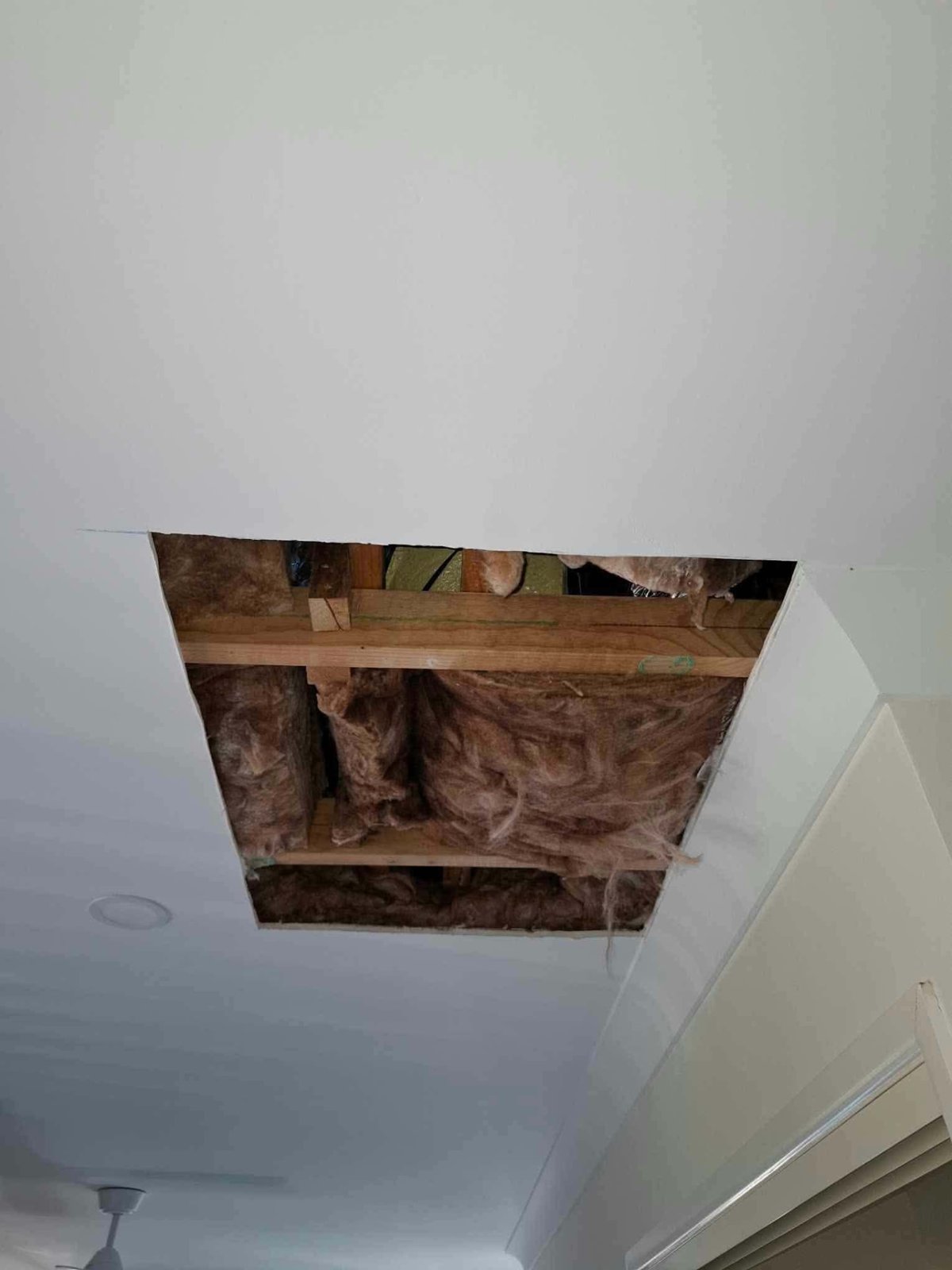
The visible mark on a ceiling does not necessarily show the full repair area. For ceiling repairs in Kelvin Grove, the first decision is whether the surrounding lining remains sound and securely supported. A small patch can be appropriate for isolated damage, but extending the repair may be necessary when nearby material or attachment is also affected.
Queensland Interior Linings can discuss a ceiling repair scope for a Brisbane property. The useful question is not “How small can the patch be?” but “Where does dependable retained material begin?”
Establish whether it is safe to inspect
A sagging, bulging or visibly unstable ceiling should not be treated as an ordinary cosmetic repair. Keep people away from the affected area and arrange an appropriate assessment. Do not press on a bulge, cut into it or enter an uncertain ceiling space to investigate.
If water is involved, the leak must be identified and resolved before damaged materials are replaced. Drying and assessment determine what can remain; a dry-looking stain alone does not establish the condition of the board or its support. Electrical concerns require qualified trades.
Use local repairs for local defects
An isolated hole or redundant opening can often be considered separately when the surrounding ceiling is intact. A local patch preserves more of the existing lining and limits removal. It still requires suitable support at the repair and enough finishing area to blend the joint.
The compromise is visibility. A patch may sit in a ceiling with an existing texture or slight unevenness, and light crossing that surface can reveal the transition. Discuss whether the intended result calls for a wider finishing area even when only a small section needs new board.
Extend the boundary when the evidence supports it
A larger replacement section may be more sensible where multiple defects sit close together, edges are weakened or nearby attachment is uncertain. It can create a more coherent repair than a collection of small patches. However, it also increases removal and may affect cornices, lighting points or adjoining finishes.
Ask how the proposed boundary relates to sound support and retained material. Replacing more ceiling is not automatically better; the additional area should have a clear purpose. Conversely, choosing the smallest possible patch can leave compromised material immediately beside new work.
Older ceilings may need asbestos assessment before any cutting, sanding or removal. The initial visual inspection should not become disturbance of unknown material.
Investigate recurring cracks before refinishing
A crack that returns after earlier filling may relate to movement, a joint detail or a problem in the support. Surface treatment alone will not necessarily address it. Ask whether further building assessment is needed before committing to another cosmetic repair.
The plastering services overview can help start a discussion about lining repairs, but structural concerns may require another appropriately qualified professional. Keep those responsibilities distinct in the proposal.
Separate repair size from repainting size
For a Kelvin Grove room, the plaster repair may be local while the sensible paint boundary is the whole ceiling. Repainting a small spot can leave a difference in sheen or colour even when the repaired surface is well prepared. Ask who handles sealing, painting and removal or reinstatement of fittings.
When contacting Queensland Interior Linings through the quote enquiry, send a full-room image as well as a close view of the defect. Include any known leak history or previous repair. A useful scope explains why the boundary was chosen, what remains subject to inspection and how the finished ceiling will meet the surrounding surface.