
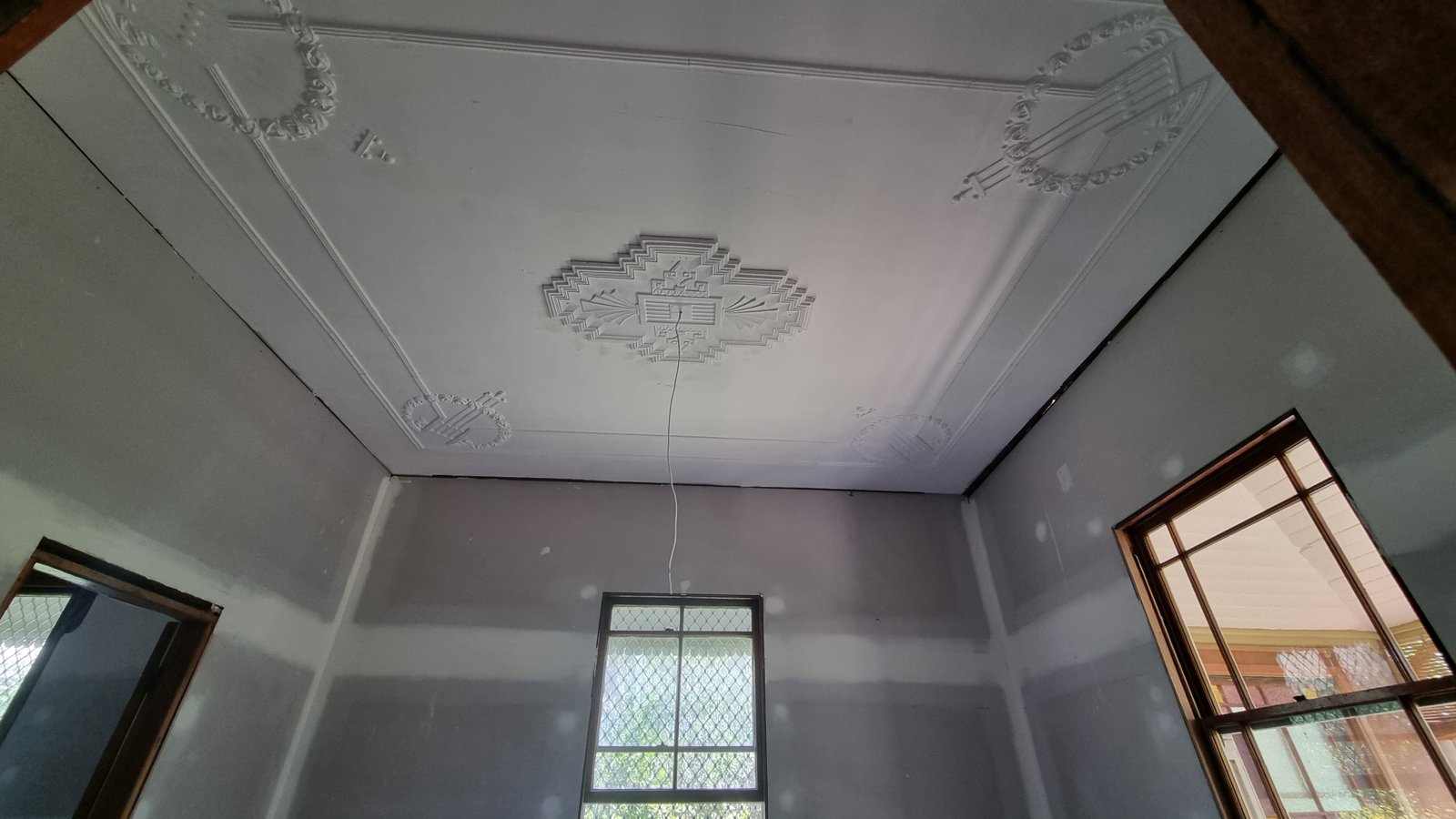
A cornice creates a continuous line where walls and ceilings meet, so even a short damaged section can affect the appearance of the whole room. The right repair depends on more than the visible crack. For a Milton interior, Queensland Interior Linings can discuss ornamental plastering and cornice work around the profile, surrounding surfaces and condition of the existing installation.
Check whether the section is sound
A cosmetic mark, a broken corner and a loose length of cornice need different assessments. The contractor should consider the moulding itself and the surfaces supporting it. Water staining or recurring cracks may indicate a problem that needs attention before a decorative repair is made.
If a section is loose or appears unstable, keep clear of it and arrange an assessment rather than trying to hold it in place with filler. Moisture-affected areas need the source addressed and the materials assessed before restoration. Water-damage repairs may involve other trades as well as the visible cornice finish.
Match the actual profile
Cornices vary in depth, projection and decorative detail. A similar-looking replacement can become noticeable where it joins the original, particularly along a long ceiling line. Photographs help begin a discussion, but measurements and the condition of the existing moulding are important when assessing whether a suitable match is available.
For ornamental cornices, ask whether the repair can preserve the detail or whether a longer replacement section gives a more coherent result. Availability should be confirmed rather than assumed. Ask whether an exact match is feasible once the profile and repair method have been assessed; it should not be assumed in advance.
Decide how far the repair should extend
Replacing only the visibly damaged piece is not always the best scope. Sound joining positions, corners and the condition of adjacent lengths can affect how far work needs to go. The contractor may recommend a larger section where that provides a more reliable junction or avoids an obvious mismatch.
Retaining the original can also be a sensible option where the material is sound and the damage is repairable. The choice should be based on assessment rather than a rule that every crack requires replacement. Compare the proposed method, likely visual outcome and adjacent work before choosing between a local repair and a wider replacement.
Include the wall and ceiling around it
Removing cornice can disturb paint and the surrounding lining. Installing a replacement may also need repairs to fixing surfaces before finishing begins. Those tasks are part of the scope even though they are not the decorative moulding itself.
Ask whether the quotation includes making good the adjacent wall and ceiling, sealing and repainting. A local paint touch-up may differ from the existing finish because of colour, sheen or ageing. Agree whether a larger surface will be painted so that a neat plaster repair is not followed by an unexpected decorating discussion.
Address older materials and access safely
Older cornices and associated lining materials may require asbestos assessment before removal or other disturbance. Appearance alone cannot reliably establish their composition. Build that assessment into the planning where the material is uncertain, rather than opening the area first and asking questions afterwards.
Ceiling height and room layout affect suitable access equipment and protection. The contractor needs a safe working arrangement and room to handle the moulding. Discuss furniture, fragile items and the route for materials before work starts, especially if the room remains part of an occupied home.
Ask for a complete cornice scope
A useful scope identifies the profile, affected lengths and corners, the repair or replacement method, substrate preparation and paintwork responsibilities. It should also explain any assumptions about concealed damage or matching availability. Queensland Interior Linings can discuss cornice installation Brisbane property owners are considering alongside broader plastering services.
For a Milton property, include clear photographs of the damage, a wider view of the ceiling line and any known history of leaks when you request a quote. This helps start a practical discussion without assuming the picture alone proves which repair is suitable.