
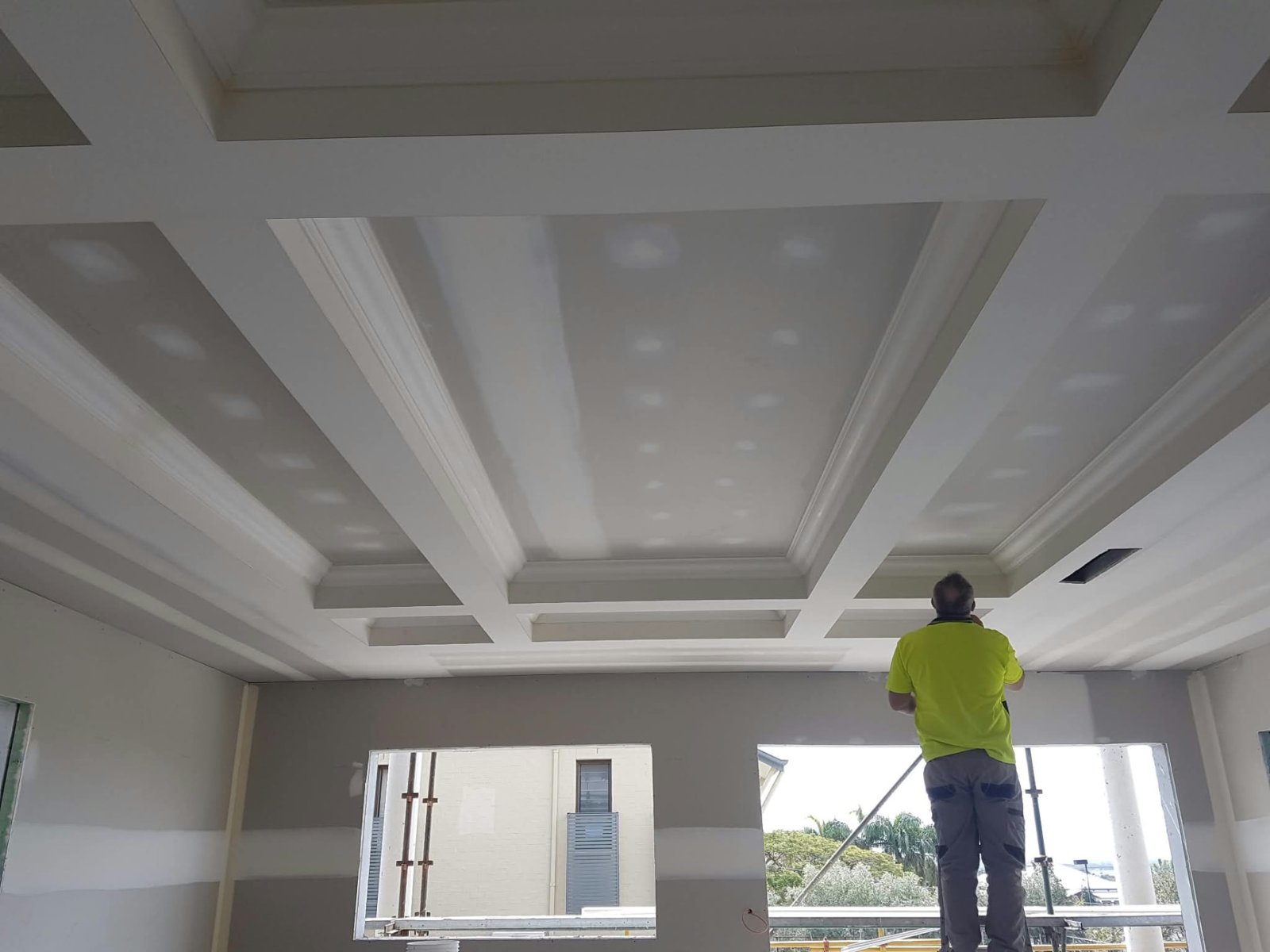
Cornice restoration can mean reattaching a loose length, rebuilding a damaged detail or replacing part of the perimeter. Those are different scopes, even if they all begin with a visible gap. For a Chapel Hill room, the first decision is what remains sound enough to retain, followed by how a repaired section will meet the surrounding profile.
Queensland Interior Linings can discuss the decorative lining work within a Brisbane restoration scope. Start with the cause and extent of the defect before deciding whether a local intervention or a continuous replacement run is more appropriate.
Distinguish a surface crack from loose material
A fine paint crack at a junction is not the same as a section that has separated from its support. Filling a gap may improve appearance temporarily, but it does not establish secure attachment. Have loose overhead material assessed rather than pressing, pulling or attempting to secure it from an unsuitable access position.
Ask whether movement, moisture or a previous repair is involved. If water has affected the cornice or surrounding lining, resolve the leak, allow drying and assess the materials before reinstatement. Repeated cracking may also warrant investigation beyond the decorative surface.
Compare reattachment with local reconstruction
Where a length remains intact and suitable for retention, a properly assessed reattachment approach may preserve the existing profile and minimise replacement. Its feasibility depends on the condition of the material, substrate and attachment detail. A cosmetic bead over the edge is not an equivalent repair.
Local reconstruction or replacement may suit a broken corner or a short missing length. It preserves more of the room's existing detail, but matching depth, projection and pattern can be challenging. Paint buildup and earlier repairs may further complicate the visual match.
The ornamental plastering page is a starting point for discussing decorative profiles. Ask whether a suitable available match exists or whether another approach needs to be investigated before assuming an exact reproduction is practical.
Consider when a continuous run is clearer
Replacing a full wall length or defined perimeter section can move the transition to a corner or another less conspicuous boundary. It may be preferable when several adjacent repairs would create repeated joins. However, the larger scope adds removal, disposal and making good to walls and ceilings.
Whole-room replacement can create consistency but also removes sound material. Compare it only where the condition or available profile makes that tradeoff worthwhile. A replacement pattern may relate well to the room without being identical to the original; that difference should be openly acknowledged.
Assess the surrounding lining before disturbance
Older linings and associated materials may need asbestos assessment before scraping, cutting or removal. The restoration method should follow guidance appropriate to the selected product and substrate, with safe access for overhead work. Do not assume a decorative task has no implications for the existing ceiling or wall.
For cornice restoration in Chapel Hill, include adjoining ceiling damage, torn paper and old adhesive residues in the scope discussion. These areas may affect the final result as much as the new cornice joint itself.
Compare the decorated result
A repaired section can remain visible if only that piece is painted. State whether decoration covers the full cornice run, the ceiling or adjacent wall areas, and identify who applies compatible primers and finishes. Retaining original material may still involve a broader painting boundary to achieve reasonable consistency.
Contact Queensland Interior Linings through the quote enquiry with a full-room view and close photographs of the defect and intact profile. A useful proposal distinguishes secure retention, local detail repair and continuous replacement, explaining the matching compromises and surrounding work associated with each alternative.