
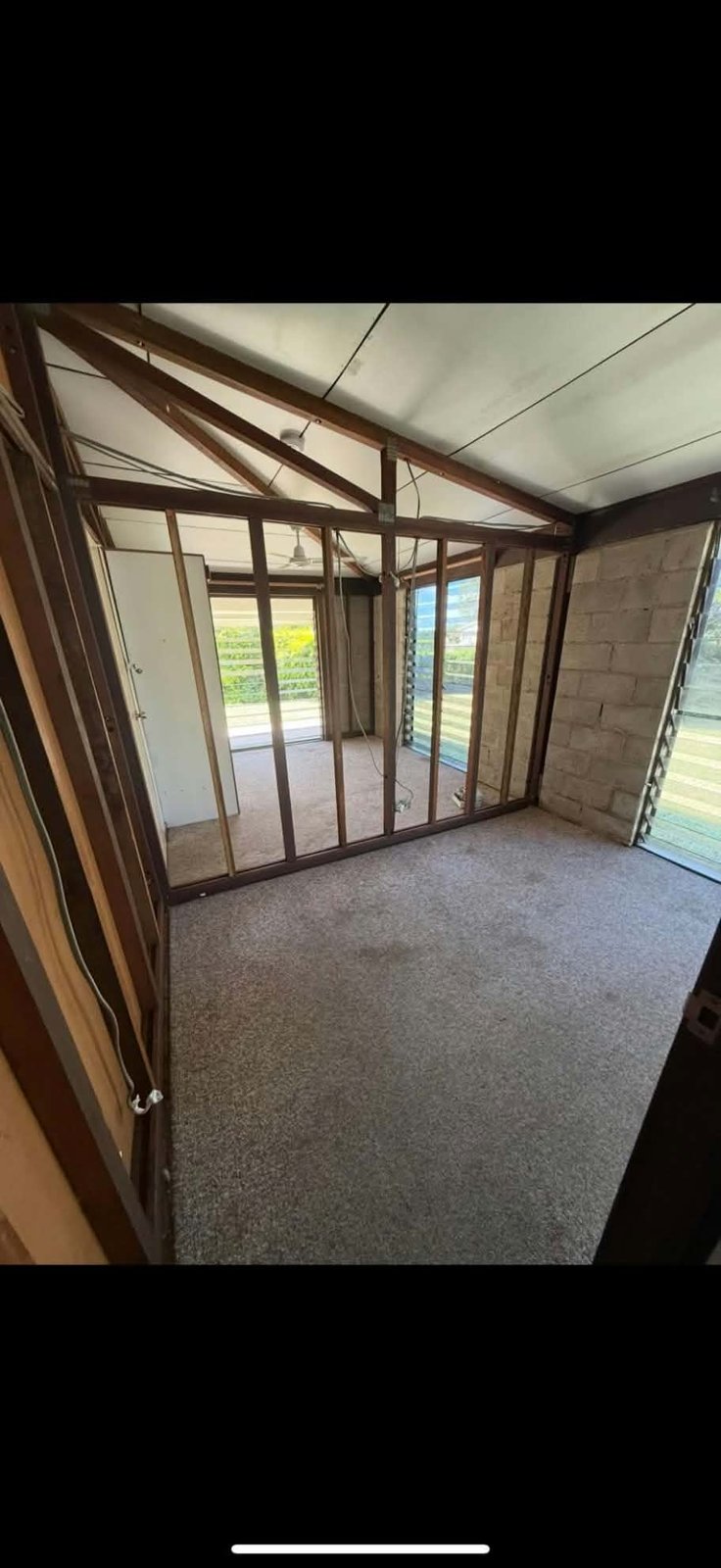
A renovation patch may be small while its visible boundary stretches much further across the room. New board, old paint and previously repaired plaster can respond differently to finishing and decoration. For renovation plastering in Brookfield, the challenge is to understand that transition before treating it as a simple hole to fill.
Queensland Interior Linings can discuss these interfaces within residential plastering. A Brisbane plastering assessment should establish what is being retained, what is sound and how the new work will meet it.
Identify what the old surface actually offers
Retained lining may carry several paint layers, loose repairs or changes in texture. The visible surface does not necessarily reveal the material or condition beneath it. Photographs are helpful for planning but cannot establish suitability for every proposed repair method.
Suspected asbestos in older materials needs assessment before sanding, cutting or removal. Queensland's look, check and prepare guidance explains why uncertain material should be treated cautiously until assessed. 2 Avoid creating an exploratory opening yourself just to improve a quote photograph.
Decide the boundary before finishing begins
A repair that stops at the edge of a damaged area may not provide enough context for a visually coherent transition. Conversely, replacing more lining does not automatically solve unstable framing or a continuing moisture problem. The proposed extent should follow the condition and design, not an arbitrary rectangle.
Ask how the repair meets corners, skirtings, doors and ceiling junctions. If the retained wall is uneven, discuss the limits of what local finishing can achieve. A broad change in plane should not be confused with a small ridge that can be addressed in the finishing layer.
Remove the reason a repair might fail
Water entry must be resolved and affected materials assessed before enclosure. Recurring cracks also need their cause considered rather than receiving the same cosmetic treatment again. A lining contractor may need information from other responsible trades before completing the repair.
New boards, supports, fixing arrangements and compounds should follow the specified manufacturer system and be compatible with the retained substrate. There is no universal fixing or sanding rule for every mixed-material junction. Electrical changes need qualified trades and should be completed in the planned sequence rather than cut into newly finished work.
Expect decoration to influence the result
Old roller texture, fresh compound and new board can remain visually different after an isolated paint touch-up. Discuss the painter's preparation and coating boundary alongside the plaster repair. The appropriate solution depends on the existing decoration and the desired result.
Critical light can make a subtle transition more noticeable. Gyprock explains why glancing light highlights variations in hand-finished surfaces. 2 This supports an early discussion about lighting and finish, not a promise that a patch will be invisible from every position.
Sequence the work around an occupied room
Allow compounds the required drying or curing time, including drying between appropriate coats. Agree dust containment, extraction and cleaning before sanding starts, especially where retained furnishings or adjoining rooms need protection.
For a renovation in Brookfield, send Queensland Interior Linings wide views and close details through request a quote. Describe what you want to keep. A useful scope makes the old-to-new boundary explicit instead of leaving it to be discovered after painting.