
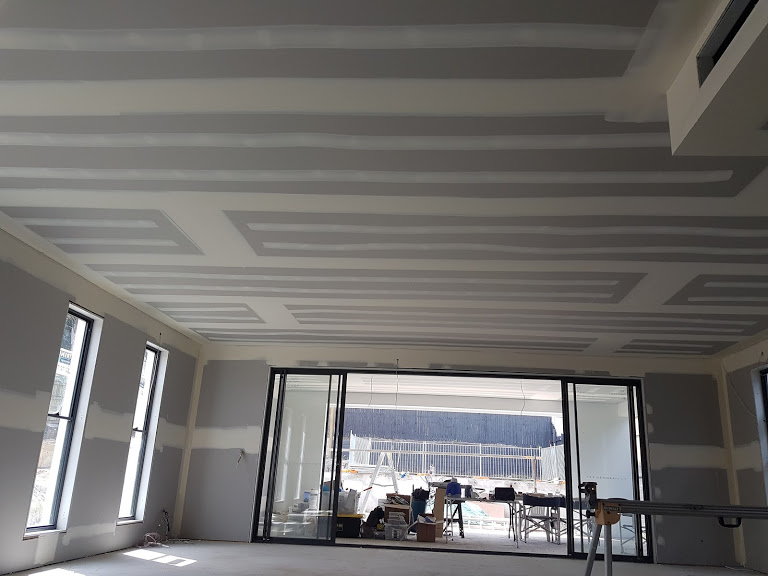
A bulkhead may look like a simple boxed edge, yet its finish depends on several decisions made before plasterboard reaches the room. Ducts, pipes, framing and lighting can compete for the same space. When bulkhead linings in Bardon show wavering edges or awkward junctions, more compound is not necessarily the right answer.
Queensland Interior Linings can discuss the lining component within a builder-coordinated project. For Brisbane plastering work, agreeing the shape and service requirements early makes the visible edges easier to assess against a clear design.
Establish which line the bulkhead should follow
An existing ceiling, a cabinet run and a window head may not share the same alignment. Following one can make another appear uneven. Before work starts, identify the intended reference and any deliberate transitions rather than assuming that every neighbouring surface is true.
A drawing or marked-up photograph can help explain the intended relationship. Include where the bulkhead starts and stops, whether its underside changes height and how it meets walls. These details are more useful than simply asking for straight lines without defining their context.
Resolve service clearances before enclosure
Service equipment may need access, ventilation or other clearances specified by its supplier or designer. The lining should not be adjusted casually around equipment that has not reached its final position. Access panels also need a considered location so later maintenance does not require damaging a completed edge.
Electrical wiring and light installation must be handled by qualified trades. Confirm lighting recesses and openings before closure. Where there is evidence of leaking pipework or condensation, resolve the moisture cause and assess affected materials rather than hiding them within the bulkhead.
Understand what causes a wavering corner
An irregular corner may reflect the framing beneath it, a poorly supported sheet edge or inconsistency in corner treatment. These conditions are different from a small finishing ridge. A professional inspection should identify the source before deciding whether local finishing or a more substantial correction is appropriate.
Board, framing, fixings, trims and compounds should follow the specified manufacturer system. Neither fixing spacing nor sanding requirements can be reduced to one universal rule. The correct details depend on the actual materials, geometry and application.
Consider strip lights before choosing the finish
Lighting close to a bulkhead edge can exaggerate tiny variations. Gyprock describes this glancing-light effect and the contribution of framing and hand finishing. 2 A finish discussion should therefore include the proposed light position and direction, not just a description of the paint colour.
Agree expectations before the fitting is installed. A more demanding finish may be appropriate, but no hand-finished bulkhead should be described as flawless under every grazing light. Changes to lighting after completion can change the apparent result without changing the lining itself.
Leave room for finishing stages
Compounds need their specified drying or curing periods, with appropriate coats dry before the next stage. Work-area containment, extraction and cleanup should control sanding dust. If existing older lining needs removal, suspected asbestos must be assessed before it is disturbed.
For bulkhead work in Bardon, ask Queensland Interior Linings to review the proposed edges, service positions and finishing boundary through request a quote. A coordinated scope helps distinguish a design conflict from a surface defect and keeps the handover focused on the intended result.