
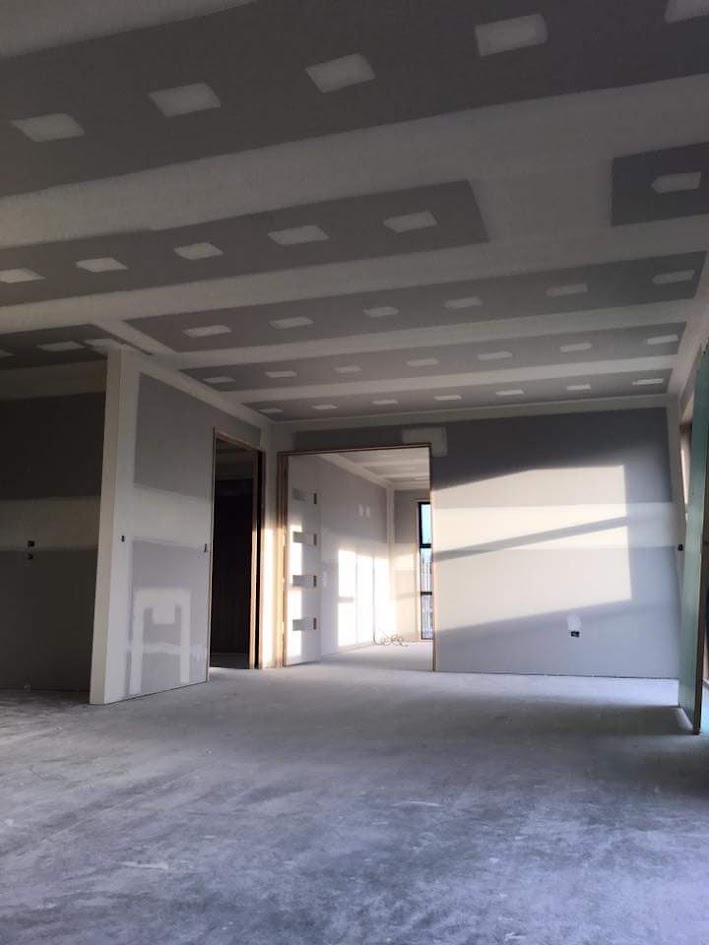
“Paint-ready” should describe an agreed handover condition, not an expectation that every wall will look identical under every light. For paint-ready plaster finishes in Ashgrove, the important choice is often between preparing local joints and repairs or treating a wider surface to improve consistency. The appropriate scope depends on the substrate, lighting and intended decoration.
Queensland Interior Linings can discuss the plastering stage of a Brisbane renovation. Painter and plasterer responsibilities should be clear before work starts, especially when a small repair sits within an older painted wall.
Identify what will remain visible after painting
A surface can feel smooth while still showing a shallow ridge or hollow when light travels across it. Large windows, wall-mounted lighting and certain ceiling arrangements can make these differences more noticeable. Higher-sheen finishes can also be less forgiving than some flatter decorative choices.
Assess the wall under the lighting it will actually receive. If fittings are being changed, discuss the future arrangement rather than judging only the existing room. Manufacturer guidance on levels of finish and glancing light provides a basis for setting expectations; an informal promise of a flawless result does not.
Compare local blending with broader preparation
Local blending is a proportionate option where the surrounding surface is sound and the repair is isolated. Compound is feathered beyond the joint or patch to reduce an abrupt edge. The work remains relatively contained, although the preparation zone will be larger than the visible defect.
Broader preparation may be worth discussing where several repairs overlap, old textures vary or critical lighting makes transitions more apparent. Depending on assessment, this might involve treating a larger wall area or considering a higher specified finish. It adds work and drying stages, and it still cannot correct substantial framing movement or alignment faults by itself.
Ask what the wider treatment is intended to improve. “More compound” is not a useful specification unless it is linked to the condition of the surface and an agreed finishing method.
Do not confuse dry compound with a finished wall
Jointing products have different setting and drying characteristics. Follow the selected manufacturer's instructions for application, recoating and sanding. Compound must not be sanded while wet; doing so can damage the work rather than shorten the process.
Dust management and protection are also part of the scope, particularly in occupied rooms. Existing coatings or old linings may need assessment before scraping or sanding, including asbestos assessment where relevant. Preparation should not disturb uncertain materials simply to discover what is beneath them.
The residential plastering service offers a starting point for discussing how new finishing work meets retained surfaces.
Define the painter's starting point
Ask who removes sanding dust, who applies the appropriate sealer or primer and who checks compatibility with the chosen paint system. “Ready for paint” does not necessarily mean sealed, primed or decorated. These responsibilities should be listed, not inferred from a brief description.
A locally repaired wall may still need broader repainting to avoid differences in colour or sheen. That is a decoration boundary, distinct from the area requiring plaster treatment. Comparing quotes becomes easier when both boundaries are shown.
Choose the scope with the room in view
For an Ashgrove property, provide photographs showing the full wall, its windows and the damaged area. Discuss whether a local repair will meet the intended appearance or whether wider preparation is justified by the lighting and paint choice.
Use the quote enquiry to ask Queensland Interior Linings for an explicit finish and handover description. A useful scope identifies the retained substrate, extent of blending, applicable finish expectations and painting exclusions. That clarity is more valuable than a vague assurance that any surface will disappear beneath paint.