
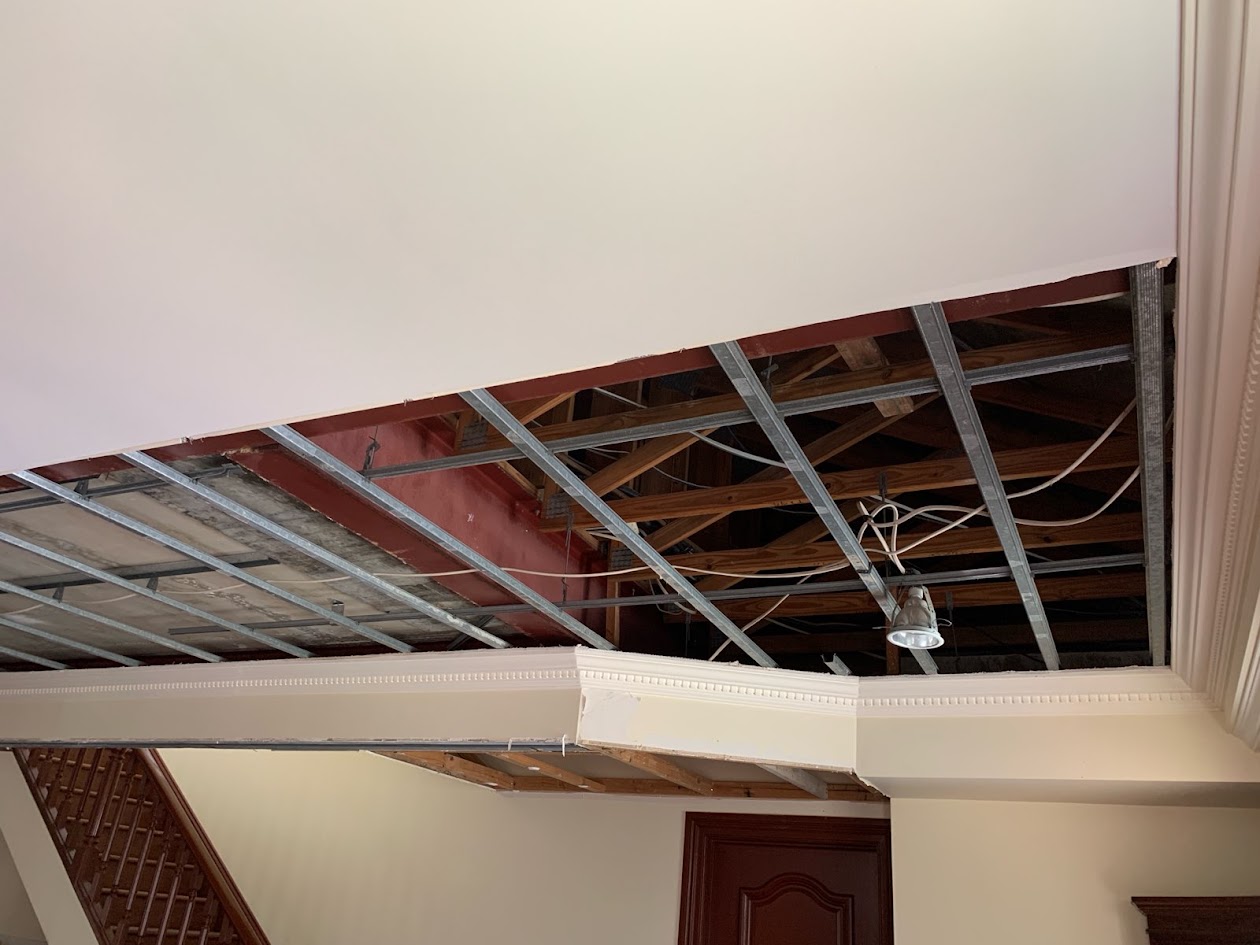
A new ceiling offers a fresh surface, but it does not automatically correct the conditions above it. Replacing damaged board without resolving moisture, support or service conflicts can carry old problems into a new finish. For ceiling replacement in Taringa, the important planning happens before removal and continues through the handover to painting.
Queensland Interior Linings can discuss the lining scope within residential plastering work. A clear Brisbane plastering brief should explain why replacement is being considered and what needs to be checked once the existing surface is safely removed.
Establish the reason for replacement
Extensive damage, repeated repairs or an altered room layout may prompt a replacement discussion. None of these descriptions alone determines the appropriate extent. The condition of retained sections, supporting elements and adjoining junctions needs professional assessment.
If the ceiling is sagging or appears unstable, keep people away and seek prompt advice rather than investigating it yourself. Photographs taken from a safe position can help the initial conversation, but they cannot confirm whether the assembly is secure.
Resolve removal risks first
Suspected asbestos in older materials must be assessed before cutting, sanding or demolition. Queensland guidance sets out why uncertain building materials need checking ahead of renovation. 2 The removal plan should follow the assessment, not assume that all ceiling material is ordinary plasterboard.
Electrical isolation, alterations and reinstatement belong with qualified trades. Discuss light fittings and other services before the work begins. Safe access, room protection and waste handling also need a defined sequence so the removal stage does not create avoidable damage elsewhere.
Inspect before the new ceiling closes the space
Water sources must be resolved and affected materials assessed before enclosure. If supporting conditions are unsuitable, identify who is responsible for correction and what information the lining installer needs before proceeding. Fresh board is not a substitute for that work.
The specified manufacturer system should determine the board, supports, fixings, joints and relevant junction details. Requirements vary with the actual assembly; a universal fixing pattern is not a meaningful quality benchmark. Record any approved changes rather than making substitutions informally.
Coordinate what returns to the surface
Light positions, access openings, cornices and square-set edges influence both installation and appearance. Confirm their final locations so later service work does not cut into newly finished areas. If the new ceiling meets retained walls, discuss whether those walls need local repairs at the junction.
Lighting and intended decoration should inform the finish specification. Gyprock identifies these as factors in selecting a level of finish. 1 Critical-light areas deserve an early conversation, while expectations should still acknowledge the nature of hand-finished surfaces.
Allow a proper finishing sequence
Compounds need their prescribed drying or curing conditions, with drying between appropriate coats. Dust extraction, containment and cleanup should accompany sanding rather than being left to the painting stage. Confirm where the plastering scope ends and the painter's preparation begins.
For a replacement ceiling in Taringa, contact Queensland Interior Linings through request a quote with photographs and known information about leaks or services. Ask for inspection points and responsibilities to be written into the scope so the new finish rests on resolved conditions.