
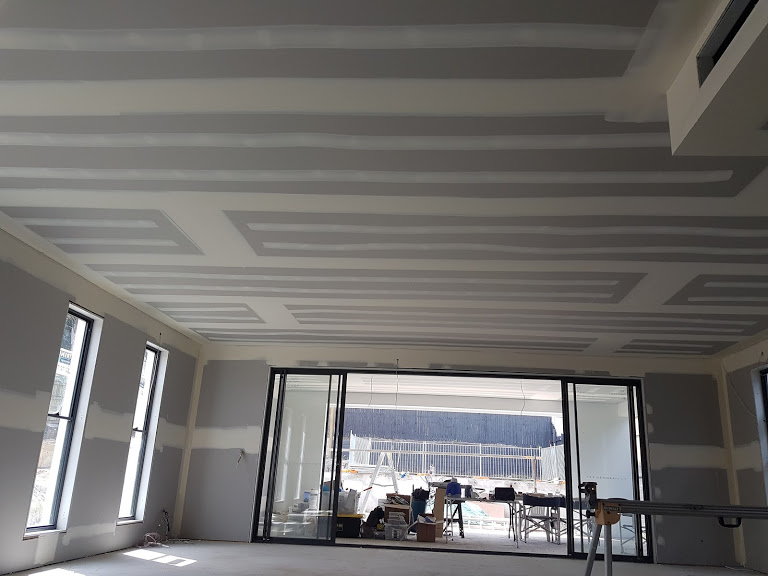
Plasterboard sheets create the surface, but joint finishing determines much of what you see once it is painted. Setting and sanding are related stages, not interchangeable ways of hiding an uneven installation. For a Brookfield interior, Queensland Interior Linings can discuss plasterboard installation and finishing with attention to the underlying board, the finishing products and the lighting in the completed room.
A finish starts below the compound
Board alignment, support and fixing affect the surface before joint treatment begins. Compound cannot reliably correct every framing or substrate defect. If there are loose edges, uneven junctions or movement concerns, these need to be assessed as part of the installation rather than left for sanding to solve.
The specified tape, compounds and accessories also matter. A compatible finishing system should be used in line with manufacturer instructions. Different products can have different setting and drying behaviour, so a single timetable for every coat and every room is not a dependable way to plan the work.
Setting and drying are not always the same thing
A compound may have reached a stage in its setting process without being ready for every subsequent operation. Follow the product's requirements for recoating, drying and sanding. Thickness, ventilation and site conditions can affect readiness, which is why a fixed overnight promise may not suit the actual work.
Sanding material before it is ready can damage the finish and create rework. Adding another coat prematurely can also affect the intended result. Ask the contractor how the product sequence fits the programme, and allow painting to follow a suitable handover instead of being booked only around an optimistic installation date.
Sanding refines rather than rebuilds the surface
Sanding is used to refine a properly prepared finish. Heavy sanding is not a substitute for correctly applied coats and can damage the board face or expose joint treatment. Overworked areas may become more difficult to blend after sealing and painting.
The aim is an appropriate finished surface for the agreed specification. It is not a guarantee that any installation defect can be removed by abrasion. Where a surface looks uneven, the contractor needs to consider whether the issue comes from the joint, the substrate, the lighting or a combination of these factors.
Plan dust controls before the room is occupied
Finishing work can generate dust, and the method needs suitable controls for the material and task. Room protection and separation help prevent unnecessary spread, but protective sheeting alone is not the whole dust-control plan. Discuss the work method, cleanup and access with the contractor before the household needs to use the area.
If older lining or associated materials are being disturbed, asbestos assessment may be needed first. That is a separate safety decision from ordinary finishing dust. Do not use a sanding task as a way to investigate an unknown older material. The appropriate assessment and work method need to be settled before disturbance.
Inspect with the intended lighting in mind
Natural light travelling along a wall can highlight variations that are less obvious under general work lighting. Directional fittings can do the same. Discuss critical-light conditions and the expected finish before the work begins, rather than assuming painting will hide everything.
Sealing, paint texture and sheen also influence the final appearance. The lining contractor and painter should have a clear handover so responsibility for remaining preparation is understood. Residential plastering work benefits from that coordination whether the room is new or part of a renovation.
Specify the stages, not just a finished date
A clear scope identifies sheeting, joint treatment, finishing, room protection and painting responsibilities. It should account for product requirements and the actual site rather than treating the wall area as the only scheduling factor. Queensland Interior Linings can discuss setting and sanding as part of plastering Brisbane homeowners are planning.
For a Brookfield project, use the quote request page to describe the rooms, the existing surfaces and the lighting you intend to keep or change. Photographs can support that discussion, while the suitability of the materials and finish still needs to be assessed for the work itself.