
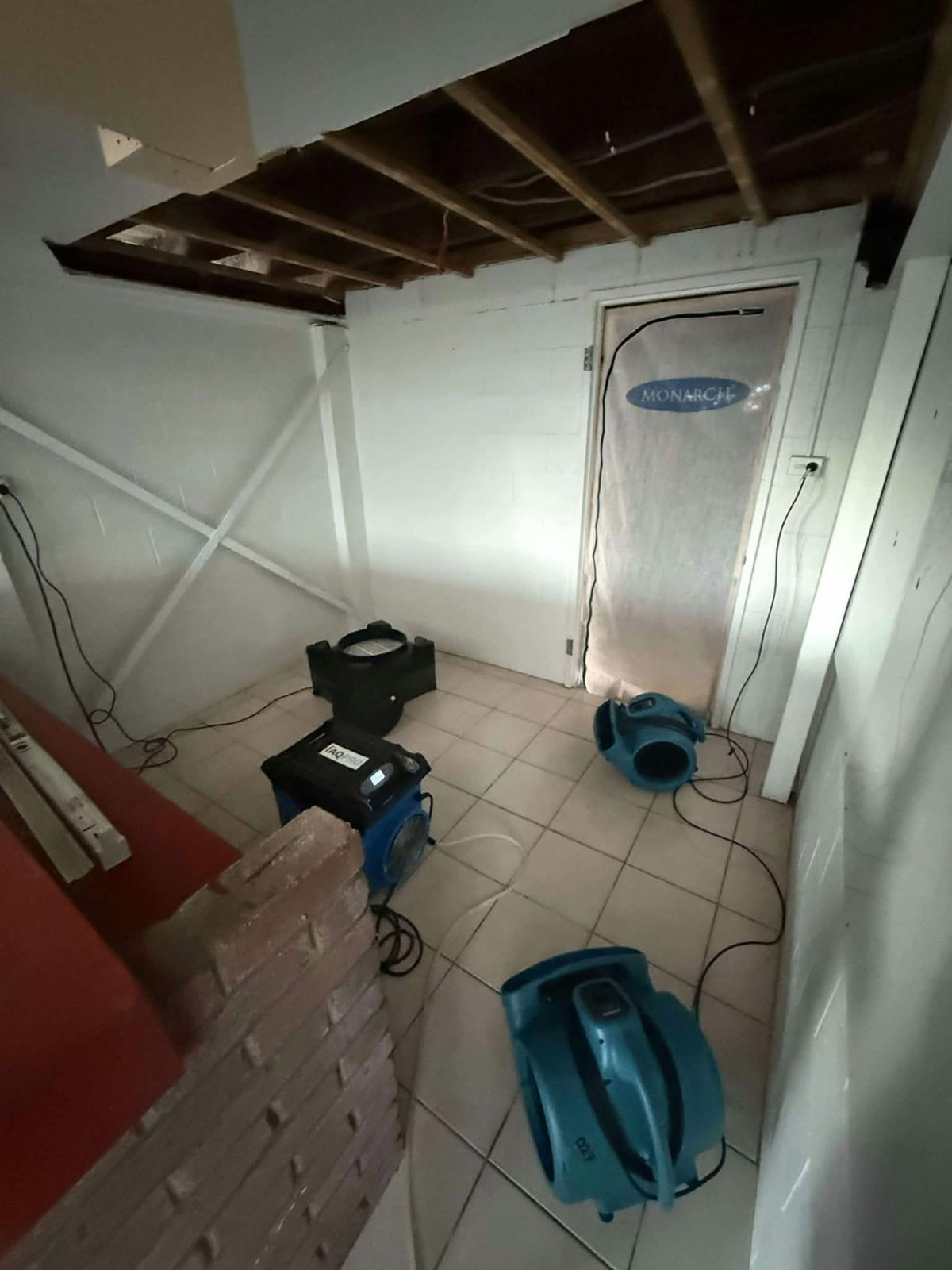
After a leak, the visible stain is often the least useful guide to the full work required. Ceiling condition, concealed moisture and nearby services all matter. Planning water-damaged ceiling repairs in Ashgrove begins with making the area safe and finding the source, not booking paint over the mark.
Queensland Interior Linings can discuss the damaged lining and reinstatement scope once the relevant investigations are underway. Keeping cause repair separate from ceiling repair helps everyone understand what must be completed before the room can move toward finishing.
Make safety the first handoff
Keep people away from a ceiling that is bulging, sagging or dropping material. Do not puncture it or stand underneath to test it. If water has reached electrical fittings or wiring, seek prompt advice from qualified electrical trades and avoid using affected fittings until they have been assessed as appropriate.
Record damage only from a safe position. A room overview and a few clear images can help explain the situation without entering the ceiling space. The responsible trades should determine access and investigation methods, not the homeowner with a ladder and a screwdriver.
Confirm the moisture source has been addressed
A roof leak, plumbing issue or another water source needs its own investigation and repair. Ask who will confirm that the source is resolved and what evidence or follow-up is appropriate. A clear day or a temporarily dry patch is not proof that the underlying problem has gone away.
Before ceiling work proceeds, assess the affected materials and concealed conditions. Drying and any necessary remediation should be directed by suitable professionals. If mould is suspected, include that issue in the assessment rather than concealing it behind new board or relying on paint to solve it.
Document the repair boundary
For example, a stain near a light may sit within a larger area of compromised lining. The assessment should inform what remains and what is removed. Where suspect older materials may be disturbed, arrange asbestos assessment before cutting, sanding or demolition.
If an insurer is involved, follow its documentation and approval process while prioritising urgent safety measures. Keep photographs, cause-repair information and scope decisions together. Our insurance repair information provides a starting point for discussing the lining component without implying that any particular claim will be accepted.
Coordinate reinstatement trades
Identify who removes and reinstates fittings, who checks supports, and who handles insulation or other affected ceiling-space materials. Qualified electrical trades must manage electrical work. Do not schedule new lining over unresolved services or damp substrates simply because sheets are available.
The replacement area should use the complete manufacturer-specified system, including board, fixing and joint treatment. Fixing spacing depends on the system and conditions. Our plastering scope information can help distinguish lining work from cause repair, drying, remediation and decoration.
Finish only when the area is ready
For an Ashgrove home, agree how the room will be contained and how dust will be extracted and cleaned. Joint compounds must dry before sanding. Discuss the extent of repainting separately, particularly where a patch meets an existing ceiling coating.
Send Queensland Interior Linings the damage photographs, available investigation findings and insurer requirements through a quote enquiry. That makes it easier to discuss the next stage without treating an unresolved leak as a cosmetic plastering job.