
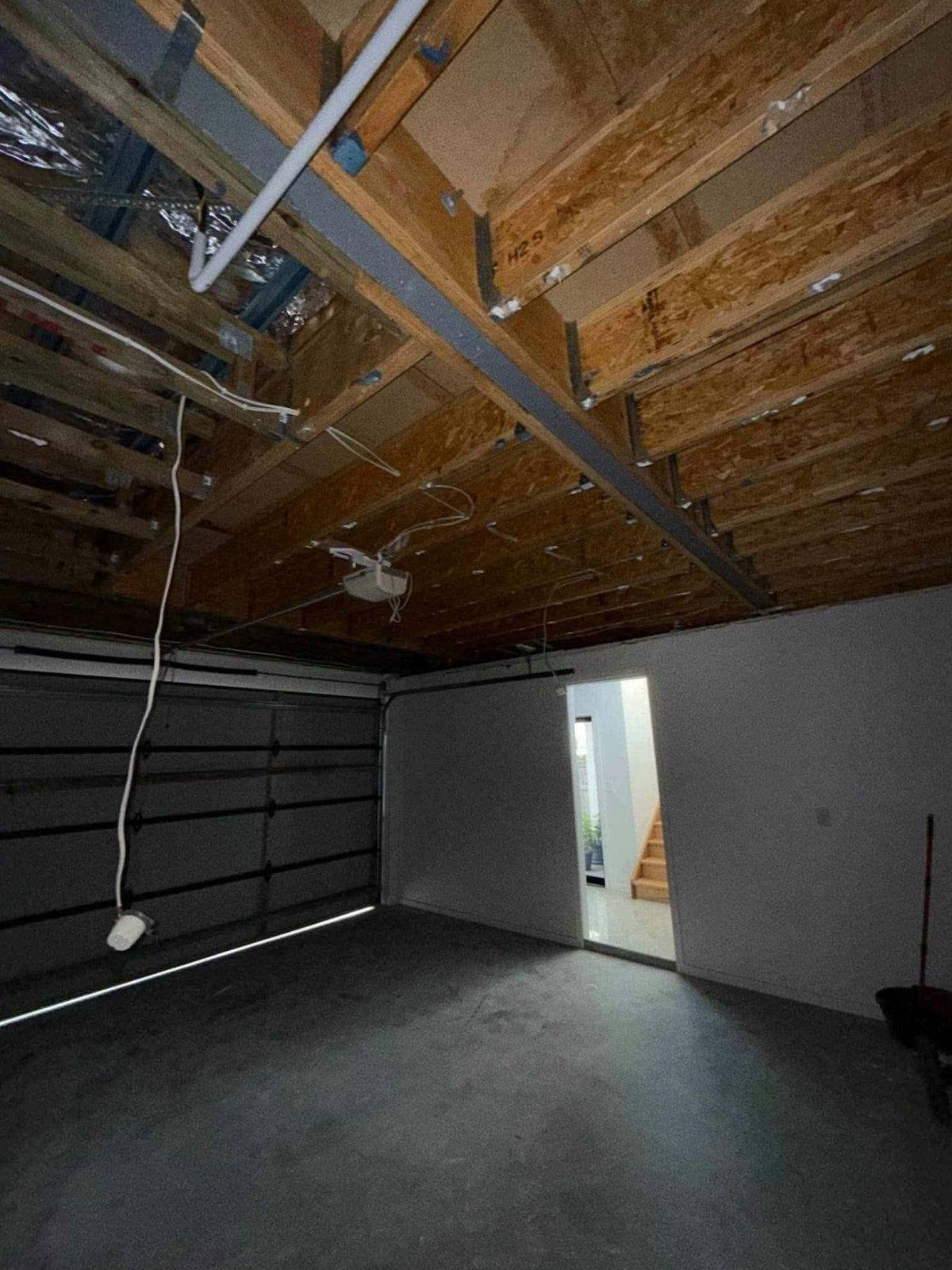
Ceiling replacement is not finished simply because the last joint has been sanded. Services, access panels, perimeter details and painting responsibilities all influence whether the room is genuinely ready for its next stage. For ceiling replacement in Brisbane CBD, Queensland Interior Linings can be asked to set out the handover requirements before removal begins. That makes the final inspection a check against an agreement rather than a discussion about assumptions.
Establish why replacement is necessary
Record whether the existing ceiling is being replaced because of damage, deterioration, altered services or a broader refurbishment. The cause shapes both the removal method and what needs checking above it. Full replacement should not be used to bypass investigation of moisture, defective supports or movement. Any underlying defect needs its own responsible party and resolution.
If the ceiling is wet, assess the leak, material condition and electrical safety before disturbing it. Keep people clear of unstable areas, and use qualified electrical trades for electrical isolation and affected fittings. Suspected asbestos must be assessed before removal or cutting. These steps can change the work programme and should appear as genuine prerequisites, not optional extras.
Write down what the replacement includes
Define the area, perimeter treatment, access openings and interfaces with walls or bulkheads. Confirm removal, disposal, protection, dust containment and the route for bringing in materials. Check whether building access arrangements or shared areas need coordination for the actual premises; do not assume every site operates the same way. Include responsibility for taking down and reinstating fittings.
The Brisbane plasterers information provides a starting point for discussing lining scope. Ask which complete specified manufacturer system will be installed, including framing or supports, board selection, fixings and jointing. If a fire or acoustic specification applies, the whole assembly and its penetrations require suitable detailing. A replacement board with a similar appearance is not evidence of equivalent performance.
Treat layout changes as coordinated revisions
A new lighting arrangement or relocated access hatch can affect both the ceiling and concealed services. Resolve positions before sheeting where possible. In Brisbane CBD, record approved revisions on a clear plan or marked-up photograph so all trades are using the same information. If a change occurs after installation, identify the required reinstatement rather than leaving each trade to assume another will finish it.
Do not force drying stages to absorb time lost to a late change. Product instructions, application and site conditions determine readiness for sanding and coating. Agree on extraction and clean-up methods, and protect completed surfaces from subsequent work. The handover date should distinguish lining completion from painting and service commissioning where these are separate tasks.
Collect a record that helps the next repair
At handover, inspect perimeter junctions, visible joints, access-panel operation and completion of agreed openings. Review the finish under the intended lighting and list any outstanding items by location. Ask for available product details, approved layout changes and relevant photographs before concealment. These records help future maintenance without implying that photographs certify concealed construction.
Confirm who has completed each related trade task and what remains outside the plastering scope. Queensland Interior Linings can discuss these boundaries through its plastering services. When you request a quote, include the reason for replacement and any known service changes. A clear handover begins with that initial brief, because the useful final question is not only whether the ceiling looks new, but whether the agreed work is complete and understandable.