
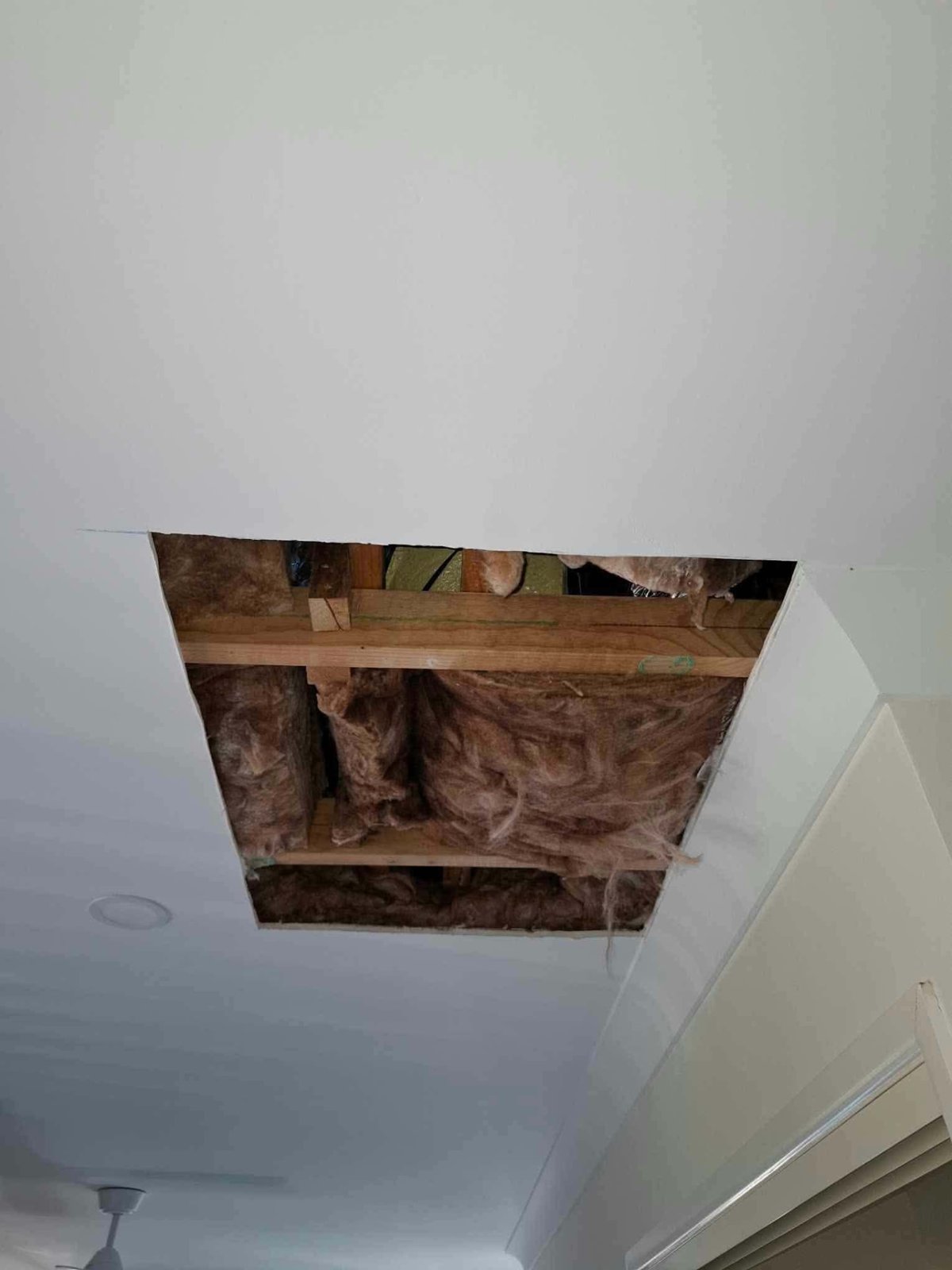
A ceiling crack that returns after filling deserves a fresh assessment, not simply a thicker coat. The visible line may be the end result of movement, moisture or a problem at a joint. For ceiling repairs in Milton, the first decision is whether the ceiling is safe to approach and what needs investigation before finishing resumes.
Queensland Interior Linings can be contacted about plastering repairs, but a photograph cannot establish structural safety. If a ceiling is sagging, bulging or shedding material, keep people clear and arrange prompt professional assessment rather than pressing on the affected area.
Record the pattern without disturbing it
Note where the crack runs, whether it follows a joint and whether a stain or change in level is nearby. Record when it was first noticed and whether it has changed. Wide room photographs can be as useful as close-ups because they show openings, junctions and the surrounding ceiling plane.
Do not climb into a ceiling space or scrape a suspect area to find the cause. For Brisbane plastering work, safe access and any need for other trades should be part of the assessment plan, not an informal preliminary task for the occupant.
Separate symptoms from causes
A fine finishing crack is different from displaced board, but appearances alone do not settle the diagnosis. A recurring line may involve movement at a connection or an unresolved condition above the ceiling. A local skim will not correct every issue hidden behind the surface.
Staining or softened material calls for moisture investigation. The water source must be resolved and affected materials assessed before the repair is closed. Electrical fittings near a wet or damaged area require attention from qualified trades; occupants should not detach them to inspect the surrounding plaster.
Decide whether a local repair has sound boundaries
A repair needs suitable retained material and support at its edges. If the surrounding lining is unstable or extensively affected, treating only the visible crack may be inappropriate. Ask why a local repair is suitable and what findings would change that recommendation.
Older materials that may contain asbestos need assessment before disturbance. Queensland guidance explains the importance of identifying uncertain materials ahead of renovation or repair. 2 This decision comes before cutting or sanding, not after debris has been created.
Finish the repair as part of the ceiling
Replacement board, fixings, tape and compounds must suit the specified manufacturer system. Appropriate coats need to dry as instructed, and the sequence should account for curing where required. Avoid universal assumptions about fixing spacing or sanding passes.
A patch can also differ in texture and absorbency from the surrounding ceiling. Discuss the painting boundary and the effect of nearby windows or lights before declaring the repair complete. Critical lighting may reveal variation even with a carefully specified finish; the aim is a reasonable agreed result, not an invisible repair under every possible condition.
Make the next visit useful
For ceiling repairs in Milton, provide Queensland Interior Linings with photographs, the history of the crack and any leak investigation through request a quote. Include access constraints and occupied-room requirements. Dust containment, extraction and cleanup should be considered alongside the repair method so the scope covers both diagnosis and execution.