
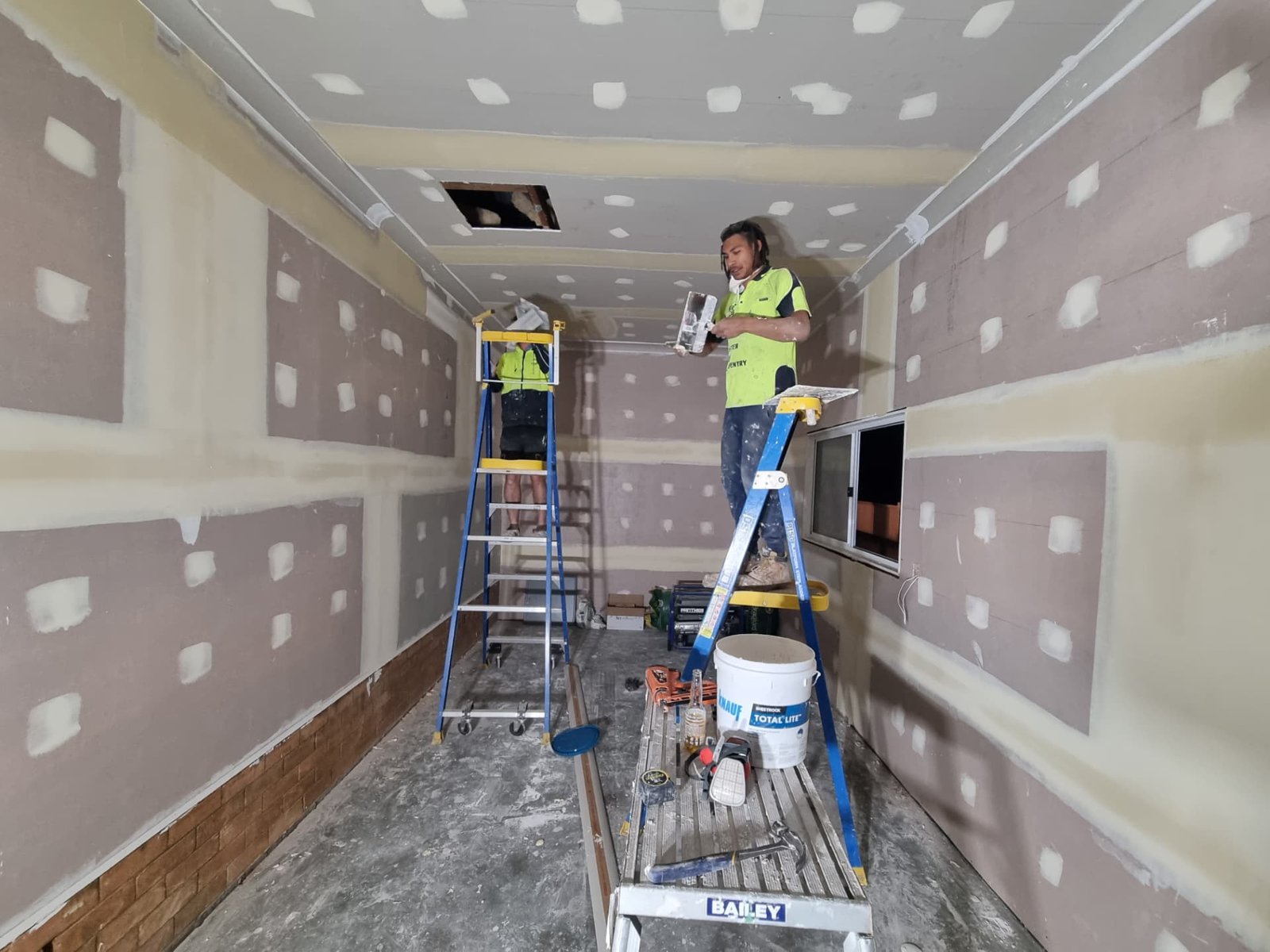
More sanding does not always produce a flatter wall. If a joint has the wrong shape or a deeper defect, aggressive sanding can damage the board face without correcting the problem. For setting and sanding in Jindalee, ask how the surface will be assessed before the final pass. Queensland Interior Linings can be asked to explain whether an area needs further setting, local correction or a different repair rather than endless abrasion.
Distinguish a ridge from an underlying problem
A minor surface ridge is different from a joint that sits proud because the sheets or backing are misaligned. Sanding can reduce some finishing irregularities, but it cannot reliably straighten defective framing or repair an unsupported joint. Where cracking or loose material is present, the underlying condition needs attention before the surface is refined. A wall should not be judged solely by how smooth it feels in one small spot.
Check broad transitions as well as individual marks. The intended lighting, paint sheen and finish requirement all affect how the completed surface will read. Review those expectations before the work is priced. The plastering service overview provides a starting point for separating substrate correction from the finishing stages that follow it.
Follow the compound system rather than a clock
Tapes, base compounds and finishing compounds need to be compatible parts of the complete specified manufacturer system. Application and drying requirements vary by product and site conditions. Do not assume every coat can be sanded after the same interval or that a firm surface proves deeper material is ready. The next step should follow the product guidance and actual condition of the work.
Where existing finishes are involved, establish whether old coatings or materials need assessment before sanding. Suspected asbestos must be assessed before disturbance. Water damage also requires its cause and material condition to be resolved, rather than being blended into the next coat. Electrical fittings that interfere with the work should be handled by qualified electrical trades, not casually removed to make sanding easier.
Use a correction point before final clean-up
Before the last sand, inspect areas with recurring ridges, exposed paper, visible tape or broad hollows. Depending on the condition, the answer may be controlled local correction, further setting or opening and reinstating the joint. Avoid treating damaged paper as a reason to keep sanding harder. Ask what the proposed correction achieves and how it affects adjacent areas.
In Jindalee, a late change to a light position or removed fitting can interrupt that finishing sequence. Record the new repair and its painting implications instead of absorbing it into an undefined final tidy-up. Dust control should include suitable extraction, containment and cleaning methods that do not simply move residue into another room. Occupied areas need protection throughout the corrective work, not just during the first pass.
Hand over a surface with clear responsibilities
Inspect under the agreed room lighting and confirm which imperfections are outstanding plaster work and which preparation belongs to the painter. Cleaning, priming and coating responsibilities should connect clearly. A surface that looks finished may still need product-specific preparation before painting; no universal drying promise should replace that check.
Keep a short record of repaired locations and selected finishing products for later alterations. Queensland Interior Linings can discuss these boundaries through its residential plastering information. When you request a quote, include whether the job is new setting, correction of previous work or preparation around existing coatings. That distinction helps choose the right intervention instead of assuming that another sanding pass is always the final answer.