
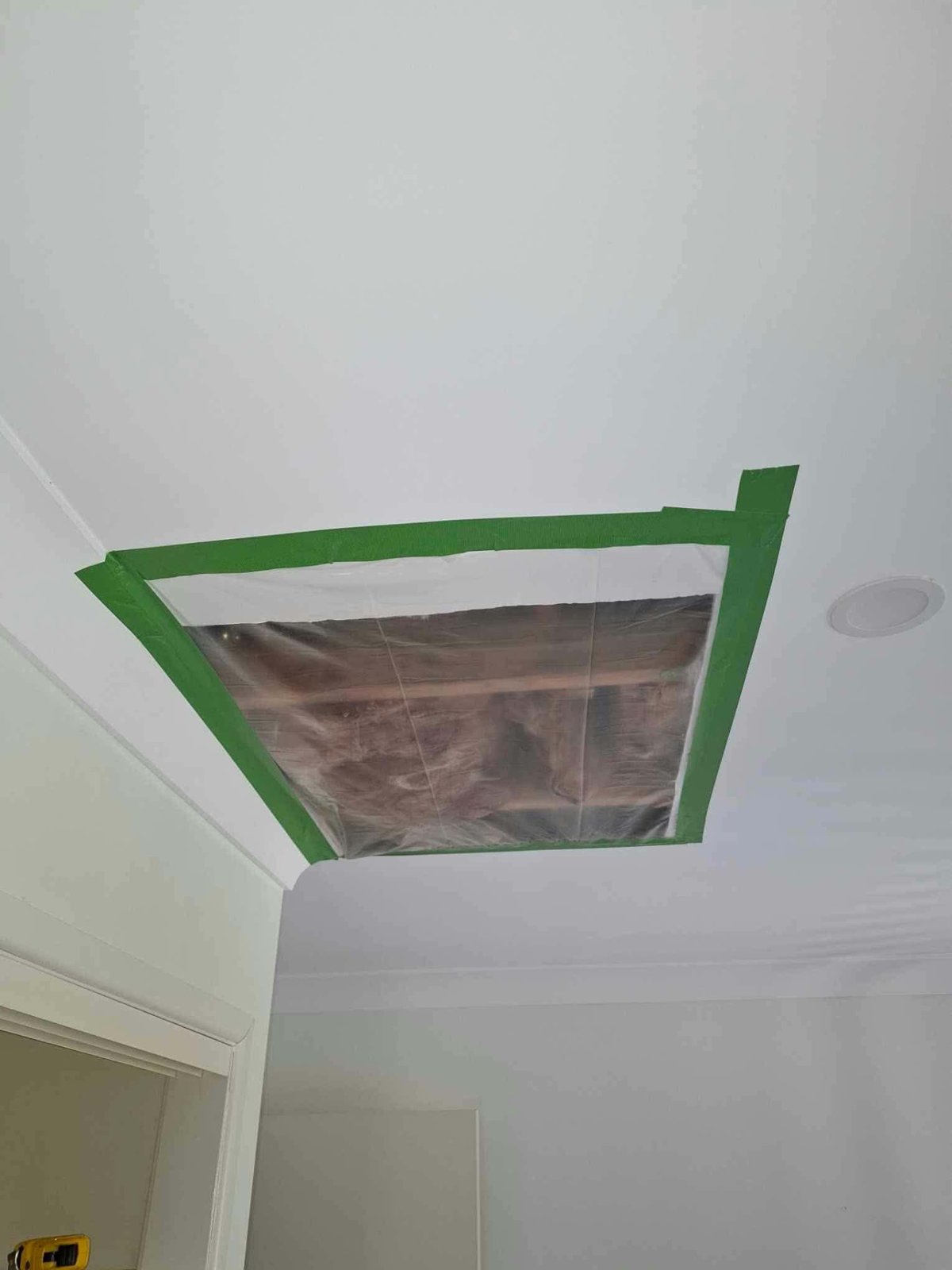
A ceiling stain can look dry while the repair is still not ready to close. The leak may be intermittent, surrounding materials may remain affected, or the visible mark may hide a loss of strength. For water-damaged ceiling repairs in Jindalee, the sequence matters more than how quickly the brown patch disappears.
Queensland Interior Linings can discuss lining repairs and the scope associated with insurance repair work. Policy decisions and approvals are separate matters; a Brisbane plastering assessment should focus on the actual condition and the work required.
Make safety the first decision
Bulging, sagging or loose ceiling material requires prompt professional attention. Keep occupants clear and do not puncture or press the ceiling to test it. Water near lights or wiring also calls for qualified electrical trades, not occupant investigation around fittings.
Describe what happened and when, including whether the stain followed rain, plumbing use or another event. These observations help the responsible trades investigate, but they do not establish the source. Avoid assuming that the wettest-looking point is directly beneath the entry point.
Confirm the source has been resolved
The appropriate trade needs to identify and address the moisture cause before the lining repair is closed. Simply waiting for the surface colour to lighten is not equivalent to resolving a leak. Intermittent events can make a problem appear settled when it is not.
Affected materials should be assessed for suitability to retain, and mould concerns need appropriate evaluation. Drying decisions should relate to the materials and actual conditions, not a universal number of days. Record relevant findings so the lining scope is based on more than the visible stain.
Choose the repair extent from condition
A small stained area does not necessarily define the damaged area. Conversely, a stain alone does not establish that every adjoining sheet must be replaced. A professional assessment should consider the board, joints, supporting conditions and boundaries of sound retained material.
If older materials may contain asbestos, arrange assessment before they are disturbed. Queensland guidance explains why uncertain materials should not be assumed safe based on appearance. 2 This applies before opening up the repair, not merely before final sanding.
Rebuild with a defined system
Replacement boards, supports, fixings and jointing materials should follow the specified manufacturer system. The installer should not rely on generic fixing or sanding rules that ignore the assembly. Compounds need the required drying or curing conditions, including drying between appropriate coats.
Containment, extraction and careful cleanup should control dust during finishing. Agree how adjoining occupied spaces and contents will be protected, and identify who will reinstate affected fittings once the lining is ready.
Keep staining and surface finish separate
Residual staining and a visible repair edge are different decoration issues. The painter should assess suitable preparation and compatible coatings after the substrate is ready. Critical light can still reveal texture or plane differences, so discuss finish expectations and painting extent without promising an invisible patch.
For a ceiling in Jindalee, provide Queensland Interior Linings with the leak history, available trade findings and photographs through request a quote. A documented sequence from source resolution to decoration is more useful than a request to cover the stain.